

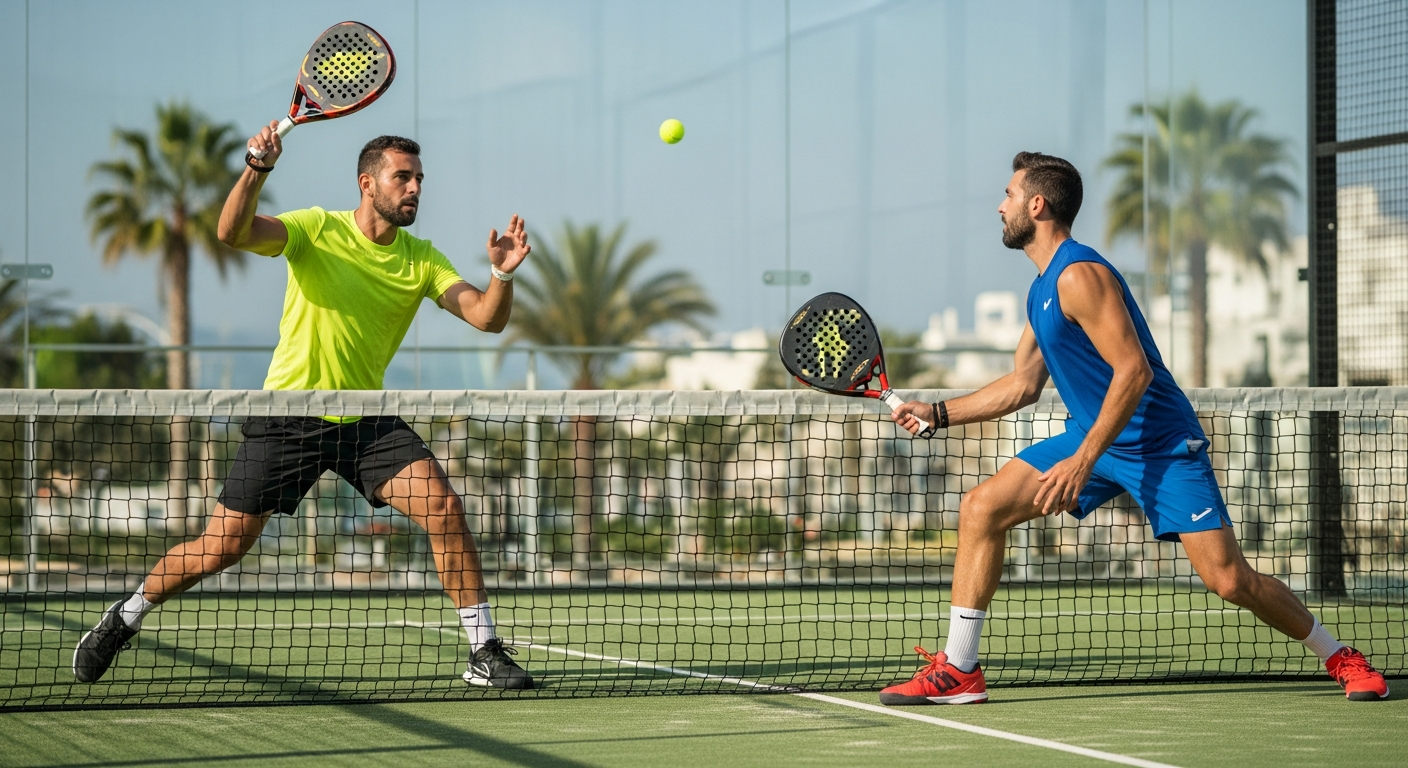
Pickleball, table tennis, badminton, squash, padel, tennis – six racket sports played around the world. Each has its passionate advocates, a different entry barrier, and different health benefits. Which is hardest to master? Which burns the most calories? And which gives you joy from the very first game? In this article we compare all six disciplines based on scientific research and recent publications.
1. Calorie Burn – Which Sport Gives the Best Workout?
One of the most common reasons for choosing a sport is its effectiveness as cardio training. Below we present data based on MET (Metabolic Equivalent of Task) values – the standardised measure of physical exertion used in scientific research.
| Sport | MET | Calories/hour (75 kg) | Average heart rate |
|---|---|---|---|
| Squash | 7.3–12.0 | 600–900 kcal | 150–175 BPM |
| Badminton | 7.0–9.0 | 475–675 kcal | 150–170 BPM |
| Padel | 6.4 | 500–800 kcal | 140–160 BPM |
| Tennis | 7.3 | 400–600 kcal | 130–160 BPM |
| Pickleball | 6.5 | 300–450 kcal | 120–145 BPM |
| Table Tennis | 4.0–7.1 | 275–400 kcal | 100–140 BPM |
MET source values: Ainsworth et al., Compendium of Physical Activities (2011, updated); heart rate data: Pratas et al. (2021), Journal of Human Kinetics; Kingsley et al. (2006), Journal of Sports Sciences (squash).
Squash holds all the calorie-burning records. Forbes Health has ranked squash as the world’s healthiest sport for many years – in an hour of play, a 75 kg player can burn up to 900 kcal. Heart rate during a squash match regularly oscillates in the 85–95% of maximum heart rate zone.
Padel stands out for its favourable ratio of intensity to injury risk. Although the MET is 6.4, players’ heart rates stay at 140–160 BPM for most of a match, with peak moments reaching 180–188 BPM. A systematic review published in Frontiers in Psychology (2025) confirmed that padel provides exercise intensity comparable to tennis at lower risk of overuse injuries.
2. Difficulty and Learning Curve
🟢 Pickleball – Easiest to Start
Pickleball is currently the fastest-growing sport in the USA. A smaller court, a fixed-height net, and a slower ball mean that most players start enjoying the game after just 30–60 minutes of their first session. A study by the American Sports Fitness Association (2023) found that 87% of new pickleball players reported satisfaction after just one hour of practice.
🟢 Padel – Quick Reward, Deep Game
Padel combines accessibility with tactical depth. The walls keep the ball in play, which paradoxically allows for longer rallies from the very first minutes of play. Surveys conducted in Spain show that over 80% of new padel players return to the court the day after their first session.
🟡 Table Tennis – Easy Start, Unlimited Ceiling
Table tennis has a very low entry barrier, but the road to true mastery is exceptionally long. At a social level, enjoyment comes quickly; however, at higher levels, years of work on technique, spins, and reflexes are required.
🟡 Badminton – Requires Precision
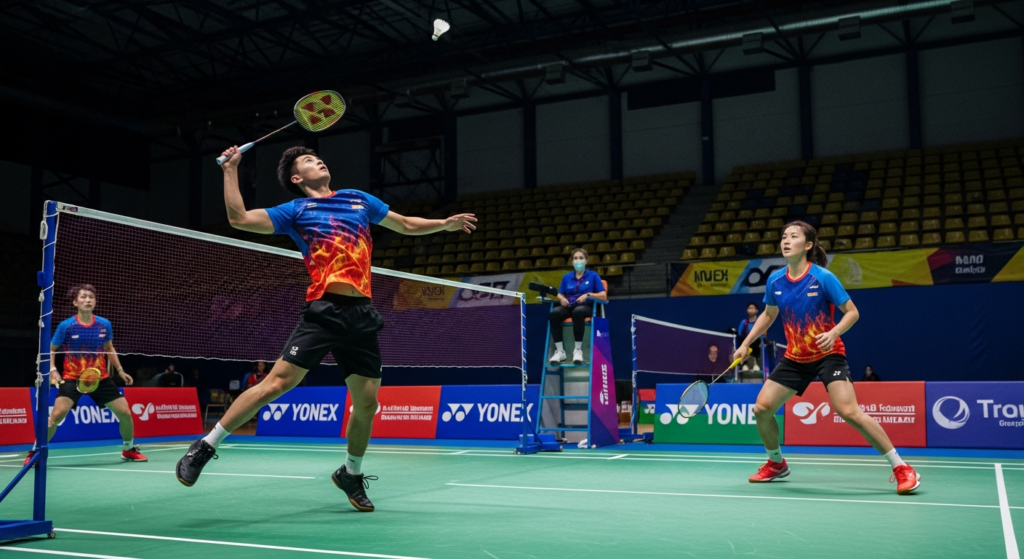
A shuttlecock flies completely differently from a ball and takes time for the eye and hand to adjust. On recreational courts, enjoyment comes after 3–6 sessions. The sport is ideal for playing in pairs or fours, which enhances the social element.
🔴 Squash – High Intensity, Demanding Technique
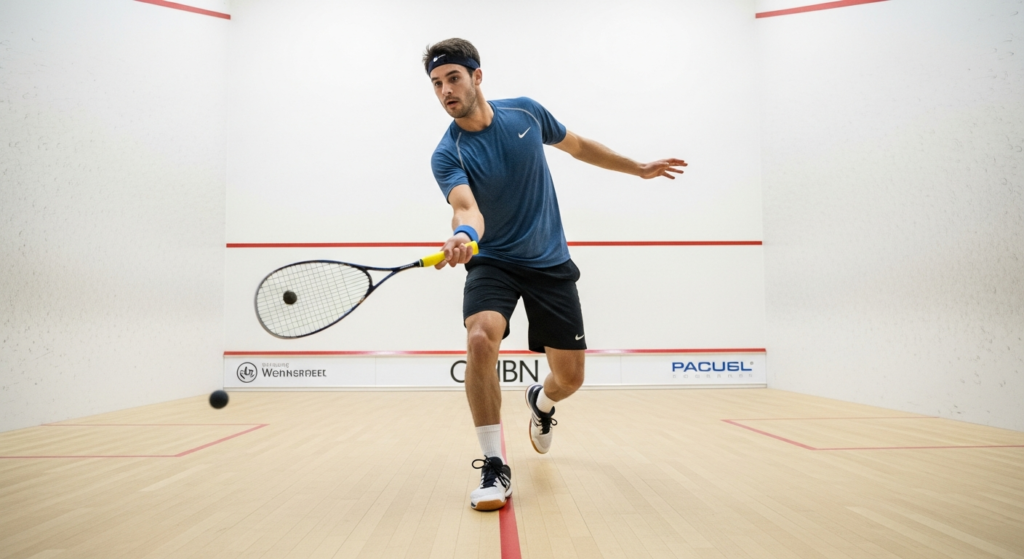
Squash is played in a closed, four-walled court. The ball is extremely fast, and the angles off the walls require a good sense of space and lightning-quick reflexes. Full freedom in the game usually comes after 2–4 months of regular practice, but even a 30-minute session provides an exceptionally effective workout.
🔴 Tennis – Hardest Among Racket Sports
Tennis is a sport with one of the highest entry barriers. A heavy racket, a fast ball, and demanding stroke technique mean that learning the basics takes months, and playing freely – often a year or more. The dropout rate among new tennis players is significantly higher than in other disciplines.
3. Time to First Enjoyment
| Sport | Time to game satisfaction | Entry barrier |
|---|---|---|
| Pickleball | 30–60 min | ⭐ (lowest) |
| Padel | 1–2 sessions | ⭐⭐ |
| Table Tennis | 1–3 sessions (socially) | ⭐⭐ |
| Badminton | 3–6 sessions | ⭐⭐⭐ |
| Squash | 4–8 sessions | ⭐⭐⭐⭐ |
| Tennis | Several months | ⭐⭐⭐⭐ (highest) |
4. Health Benefits – What Does the Science Say?
Cardiovascular System
All six sports engage the circulatory system, but with varying intensity. Comparative research (British Journal of Sports Medicine, 2020) confirmed that racket sports as a category are associated with lower cardiovascular mortality risk than, for example, running or cycling – due to the combination of aerobic, interval, and social elements. Squash provides one of the most intense training stimuli for the heart among all recreational sports.
Brain and Cognitive Function
An article published in National Geographic (2024) cites research indicating that playing padel increases levels of BDNF (Brain-Derived Neurotrophic Factor) – a protein responsible for forming new neural connections, improving memory, and protecting against dementia. Squash, due to the need for rapid analysis of rebound angles and anticipating opponent movements, also intensely engages the brain’s executive functions. Table tennis is sometimes used in therapy for people with Parkinson’s disease.
Mental Health and Stress Reduction
A 2025 systematic review published in Frontiers in Psychology (24 studies on padel and pickleball) found that regular play lowers cortisol levels, reduces symptoms of depression and anxiety, increases self-efficacy, improves sleep quality, and strengthens sense of social belonging. Squash has long been recognised as an excellent stress reliever – the intense effort in a closed court promotes a strong release of endorphins.
Musculoskeletal System and Injury Risk
- Tennis – highest risk of overuse injuries (tennis elbow, shoulder problems)
- Squash – moderate–high risk of knee and ankle injuries; specific risk of eye injuries (protective eyewear mandatory!)
- Badminton – high frequency of ankle and Achilles tendon injuries
- Padel – moderate risk, most common are ankle sprains; significantly lower than tennis and squash
- Pickleball – low risk in recreational play
- Table Tennis – lowest injury risk among all six disciplines
5. The Social Dimension
Padel stands out in terms of social integration. The game is always played in doubles (2 vs 2), and communication with your partner is key. Research from Spain and Argentina shows that padel strongly builds social bonds – shared training sessions frequently develop into lasting friendships. This is exactly why the padel camp format is so effective – both athletically and socially.
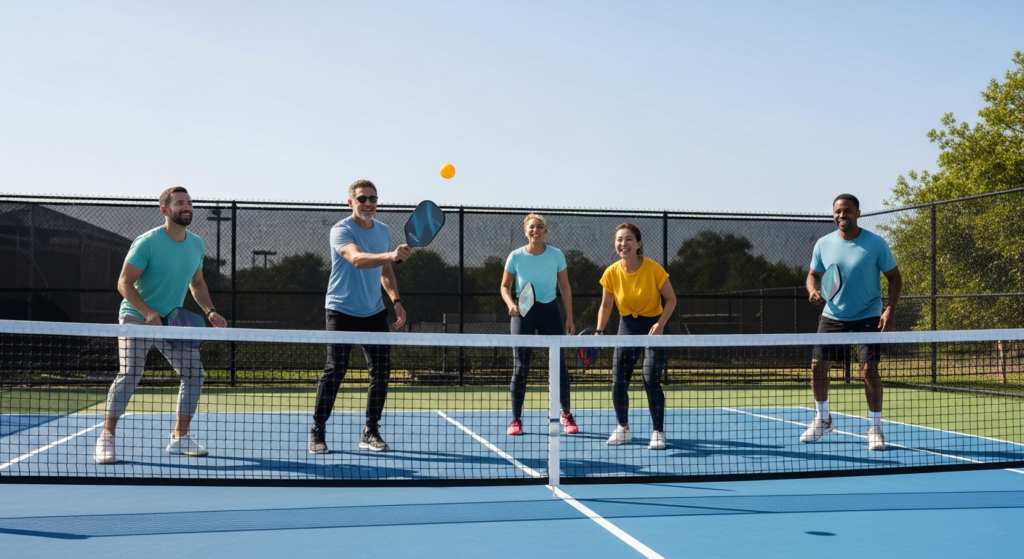
Squash is traditionally a singles sport (1 vs 1), very popular among business people – a short session (30–45 min) and weather-independent play make it ideal for busy schedules. Pickleball builds strong local communities – particularly in the USA. Badminton and table tennis are more often played as singles. Tennis, particularly at higher levels, has traditionally a more individual character.
Summary: Which Sport to Choose?
| Criterion | Best choice |
|---|---|
| Calorie burn | Squash / Badminton |
| Easiest to start | Pickleball |
| Quick satisfaction | Pickleball / Padel |
| Cognitive benefits | Padel / Squash / Table Tennis |
| Mental health | Padel / Pickleball / Squash |
| Low injury risk | Table Tennis / Pickleball |
| Social aspect | Padel / Pickleball |
| Workout for busy people | Squash |
| Tactical depth | Tennis / Squash / Badminton |
Squash wins on calorie efficiency and is excellent for those seeking short, intense sessions. Padel, however, stands out for its unique combination: accessibility for beginners + high cardio intensity + strong social dimension + documented mental health benefits. It’s a sport that brings joy from the very first game, while engaging you for years. If you want to see for yourself why padel is so addictive – check our upcoming padel camp dates.
Sources
- Ainsworth BE et al. (2011). 2011 Compendium of Physical Activities. Medicine & Science in Sports & Exercise.
- Pratas JM et al. (2021). Physical demands during padel match play. Journal of Human Kinetics.
- Kingsley M et al. (2006). Effects of acute squash play on cardiovascular and physiological variables. Journal of Sports Sciences.
- Carrasco-Marginet M et al. (2025). Systematic review: padel and pickleball effects on psychological wellbeing. Frontiers in Psychology.
- Pluim BM et al. (2020). Racket sports and health outcomes. British Journal of Sports Medicine.
- National Geographic (2024). Why padel is taking over the world.
- American Sports Fitness Association (2023). Pickleball participation report.